Laser cutting: advantages & disadvantages

What is laser Cutting

CNC laser cutting is a key process utilised by metal fabrication subcontractors for the manufacture of sheet metal components and products.
It’s a metal cutting technique that offers a precise metal profiling solution and delivers consistent, accurate and cost-competitive results.
Laser cutting involves cutting sheet metal using a highly precise laser beam that focuses on a tiny area of the material. Lasers offer a way of cutting metal efficiently and quickly enabling KMF to meet the ever-growing demand for high-quality metal machined products.
CNC laser cutting is often favoured for its ability to produce intricate designs, reduce material wastage and minimise changeover times. Computers allow the cutting of almost any shape and patterns are only limited by what the client can draw.
Technology allows the high-powered laser cutting of many kinds of metal including different grades of steel, vital to many industries such as the automotive and aerospace sectors.
The process is supported by computer-controlled programming that determines how and where the laser beam interacts with the material. Advances in technology have seen the introduction of laser/punch combination machines that suit fabricators who require cost-effective and flexible and metal cutting solutions.
Advantages of Laser Cutting
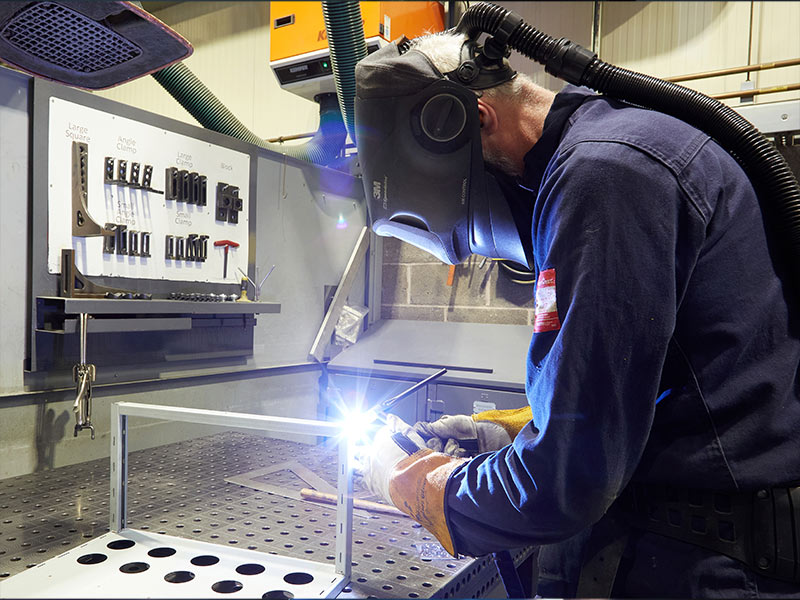
CNC laser cutting provides a precise, versatile and fast profiling solution in metal forming design. It is ideal for intricate patterns and is extremely cost-effective.
During the cutting process, physical contact with the metal is limited to an ultra-fine laser beam. This helps eliminate the risk of material contamination and damage to the material surface, particularly beneficial when fabricating soft sheet metals or creating aesthetic products.
Other advantages of laser cutting machines include:
- CO2 and fibre lasers can create complex shapes from different materials, including mild steel, aluminium, copper and plastics, in various thicknesses
- The ability to carry out other metalworking techniques such as marking and engraving-Laser cut surfaces have less roughness or ‘burrs’ and avoid the need for secondary metal finishing which can increase costs and lengthen lead times. Smoother edges are achieved with thinner materials.
- Compared to other cutting processes the area exposed to heat during laser cutting is tiny, reducing the likelihood of warping and allowing for more precise results.
Disadvantages of laser cutting
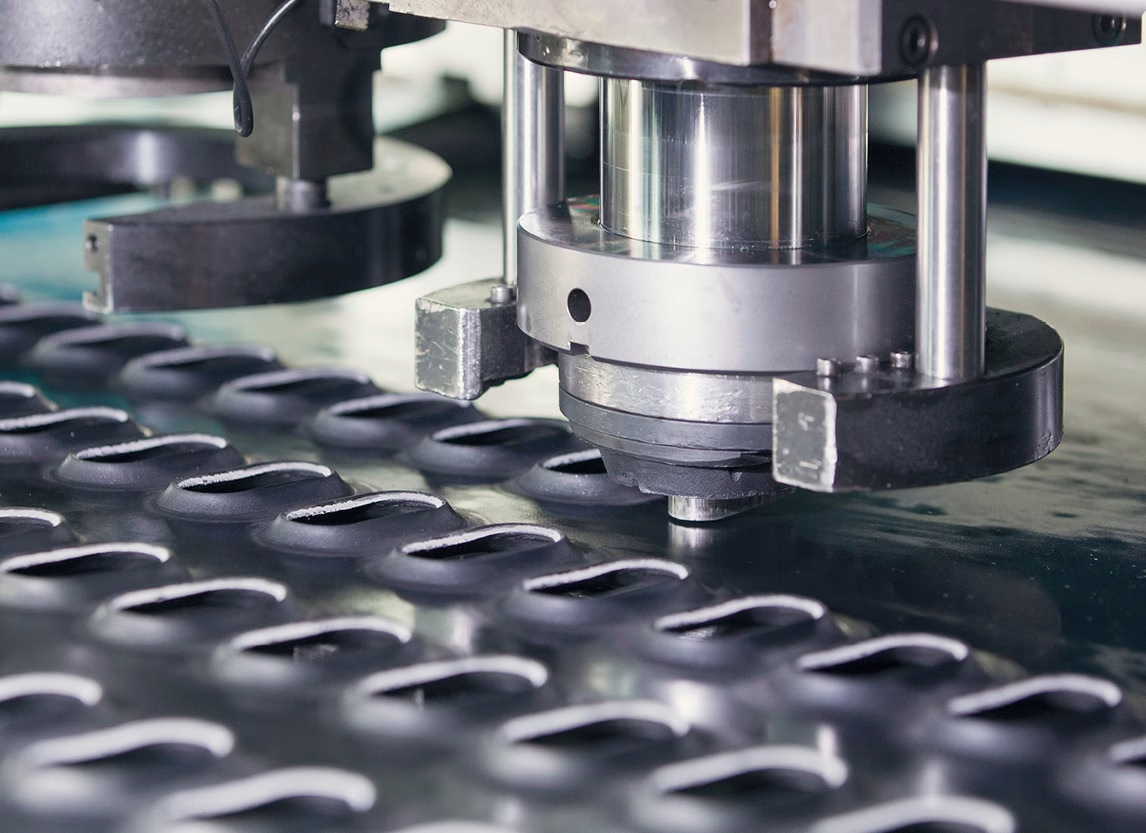
- More accurate results are achieved with thinner material thicknesses
- When cutting simple shapes in large batches, CNC punching machines can improve on production speeds.
- Less precise results compared to CNC punching when fabricating softer materials such as aluminium.
- Laser cutting tends to have a rate of high energy consumption.
FAQs about laser cutting
A laser focuses a very narrow beam of light, often under 0.1 mm wide, onto material. The beam is controlled by CNC software so it can follow intricate paths with tolerance as tight as ±0.05 mm, producing fine details and sharp corners that are hard to achieve with mechanical cutting
Quick Links
Contact Our
Sales Team
Contact Our Sales Team
Do you want to increase the strength of your manufacturing process? Get in touch with our experts...
